Stefan Vaskevich

Tools used in this article


Which AI model is best for Blender and 3D right now? For most work, Claude Opus 5.5. It won my complete-game test against GPT-6.1, Gemini 4 and Meta’s Muse, and it beat Gemini 4 and Kimi K3.1 Pro on nearly every Blender task. GPT-6 Astra is the pick for detailed procedural cars and ships, and it builds them faster or cheaper. Gemini 4 Argon is the budget option, often at a tenth of the price per task. None of them can UV unwrap a model yet.
This page collects seven of my comparison videos from August to November 2026: more than 40 tests where every model got the same prompt, the same tools and maximum effort. Below is the winner for each kind of 3D job, the head-to-head results, and what each run cost. Costs are what the same tokens would cost through the API; I ran most tests on subscriptions. I update this page when a new model lands.
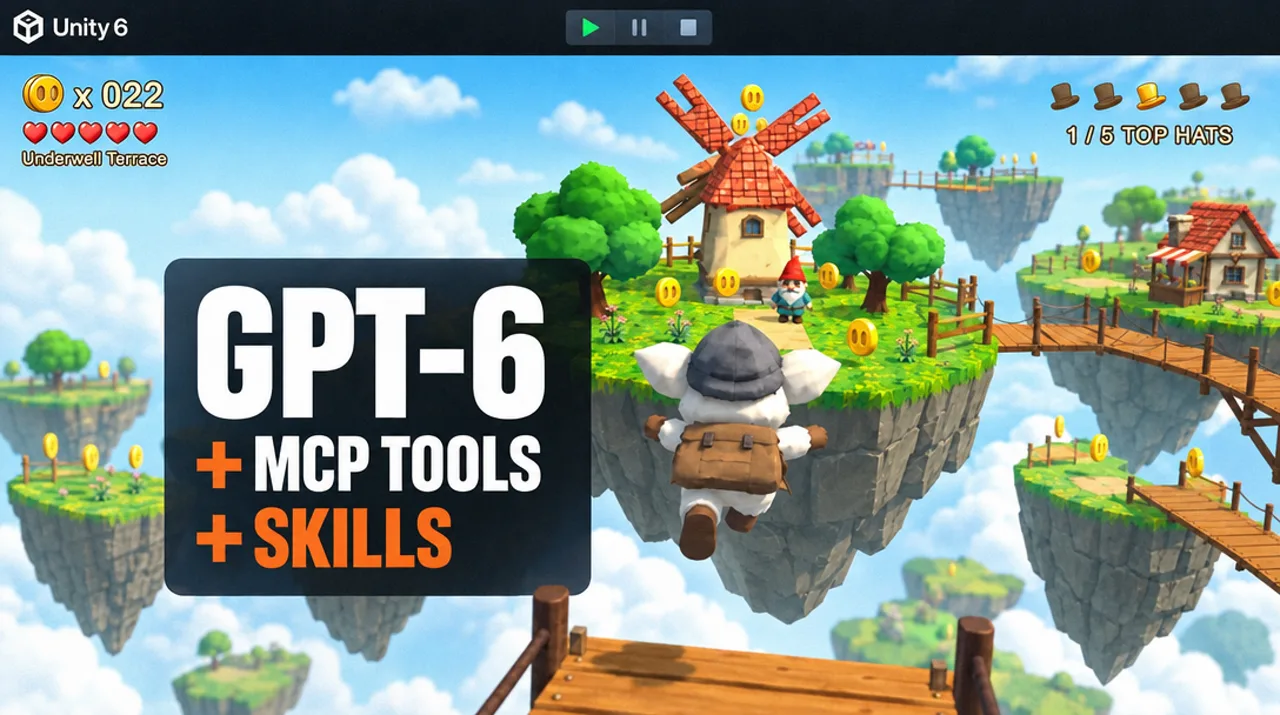
The newest test: four models build Fortnite in Unity
Props, map and a full game, with every result and every bill on screen.
1. The best AI model for each 3D job
One model does not win everything, so here is the answer per job. “Runner-up” is the model I would reach for if the pick is too expensive or not available to you.
| Job | Pick | Runner-up | Why |
|---|---|---|---|
| A complete game in Unity | Claude Opus 5.5 | Gemini 4 Argon | The only build that played like the brief; also the fastest of the four (24 h of agent time) |
| Creature and character animation | Claude Opus 5.5 | GPT-6 Astra | Same rig quality, but clearly better jump and attack cycles, in 46 minutes against 63 |
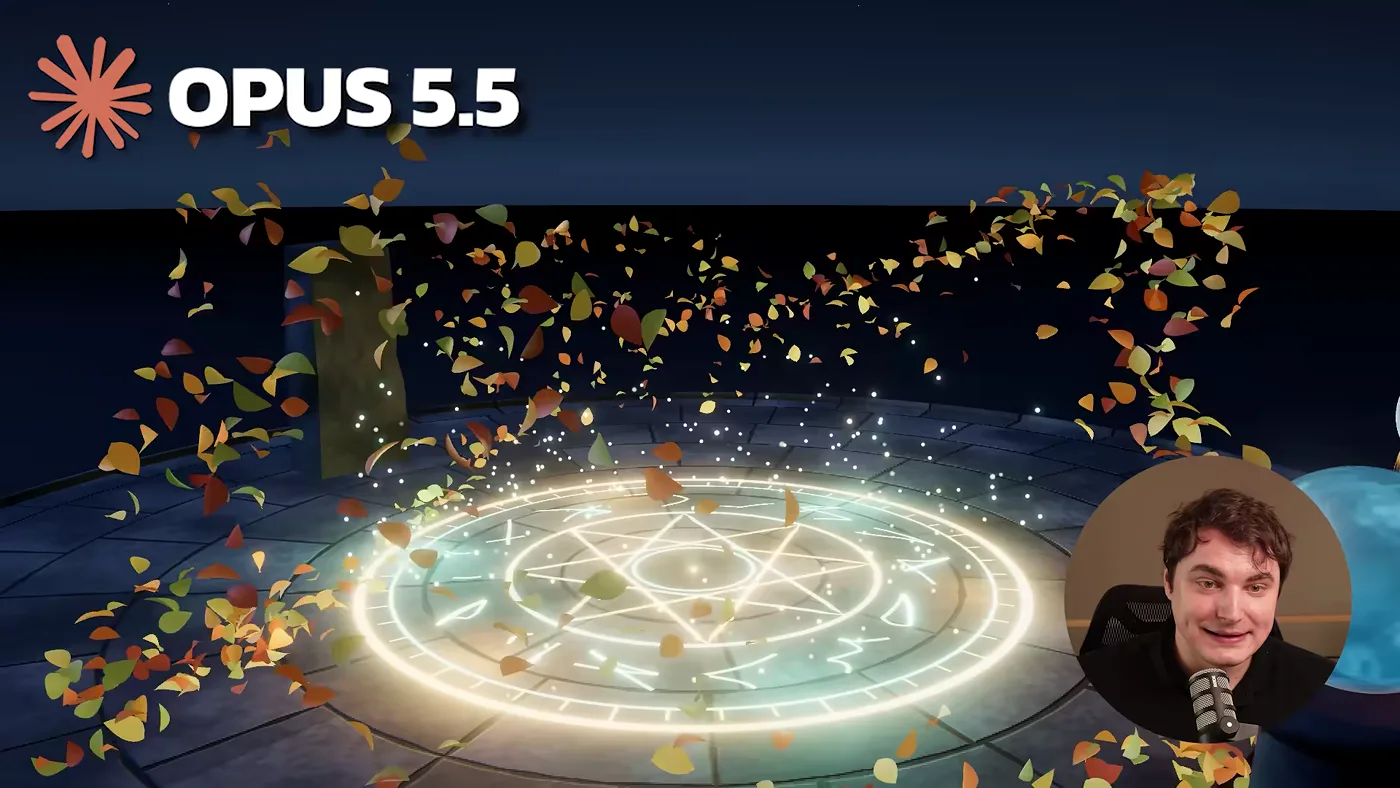
| VFX and shaders | Claude Opus 5.5 | GPT-6 Astra | The magic circle, the leaf swirl and the camera work were a level above |
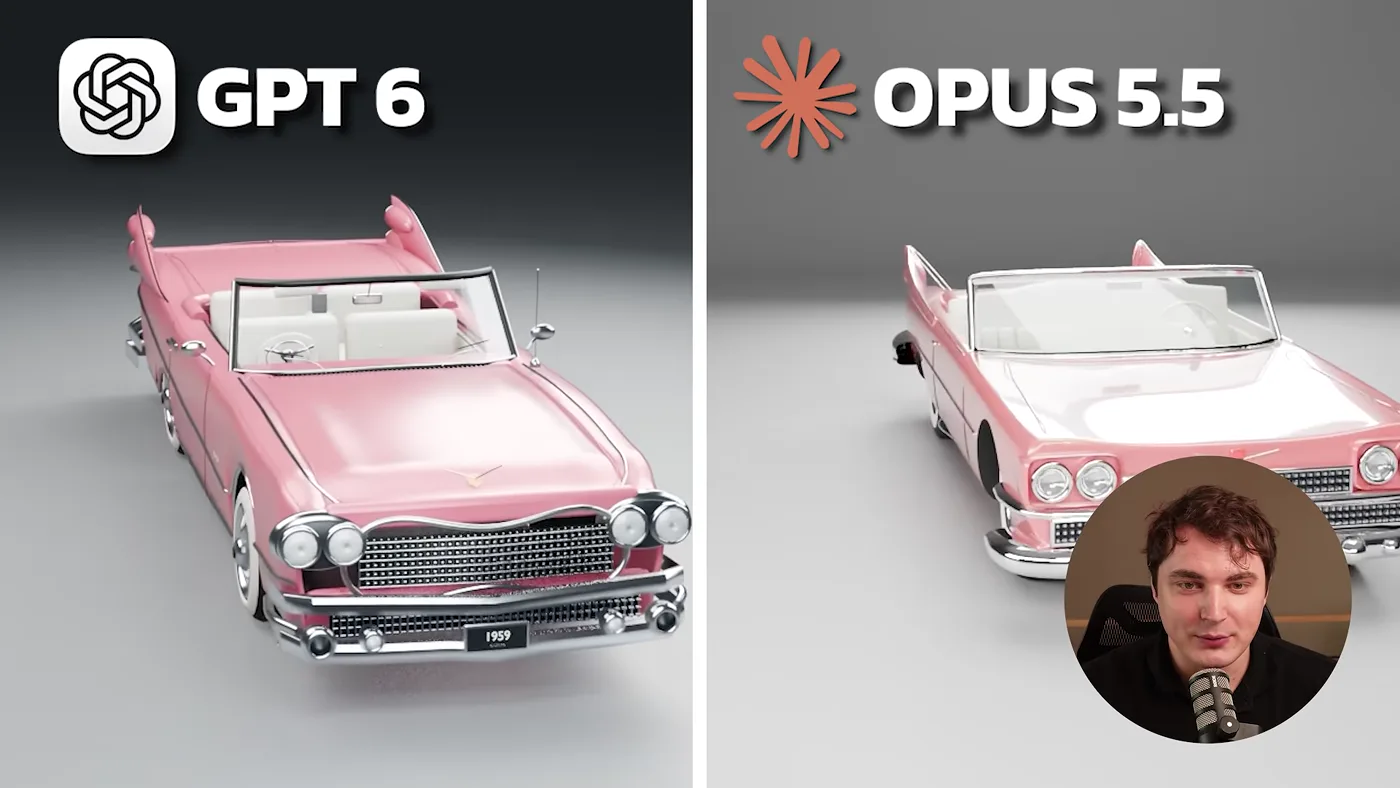
| Procedural hard-surface: cars, ships | GPT-6 Astra | Claude Opus 5.5 | More detail on the Cadillac and the galleon; the galleon at about half the cost |
| Rigging a creature | GPT-6 Astra or Opus 5.5 | - | Both build a control rig with IK; GPT-6 Astra did it without being asked |
| Single props on a budget | Gemini 4 Argon | GPT-6.1 Sol | Best single props in the Fortnite test, often a tenth of the Opus price; very slow |
| Open weights you can run yourself | Kimi K3.1 Pro | DeepSeek 4.1 | Roughly Gemini 4 level in my tests, and it beat Gemini on several of them |
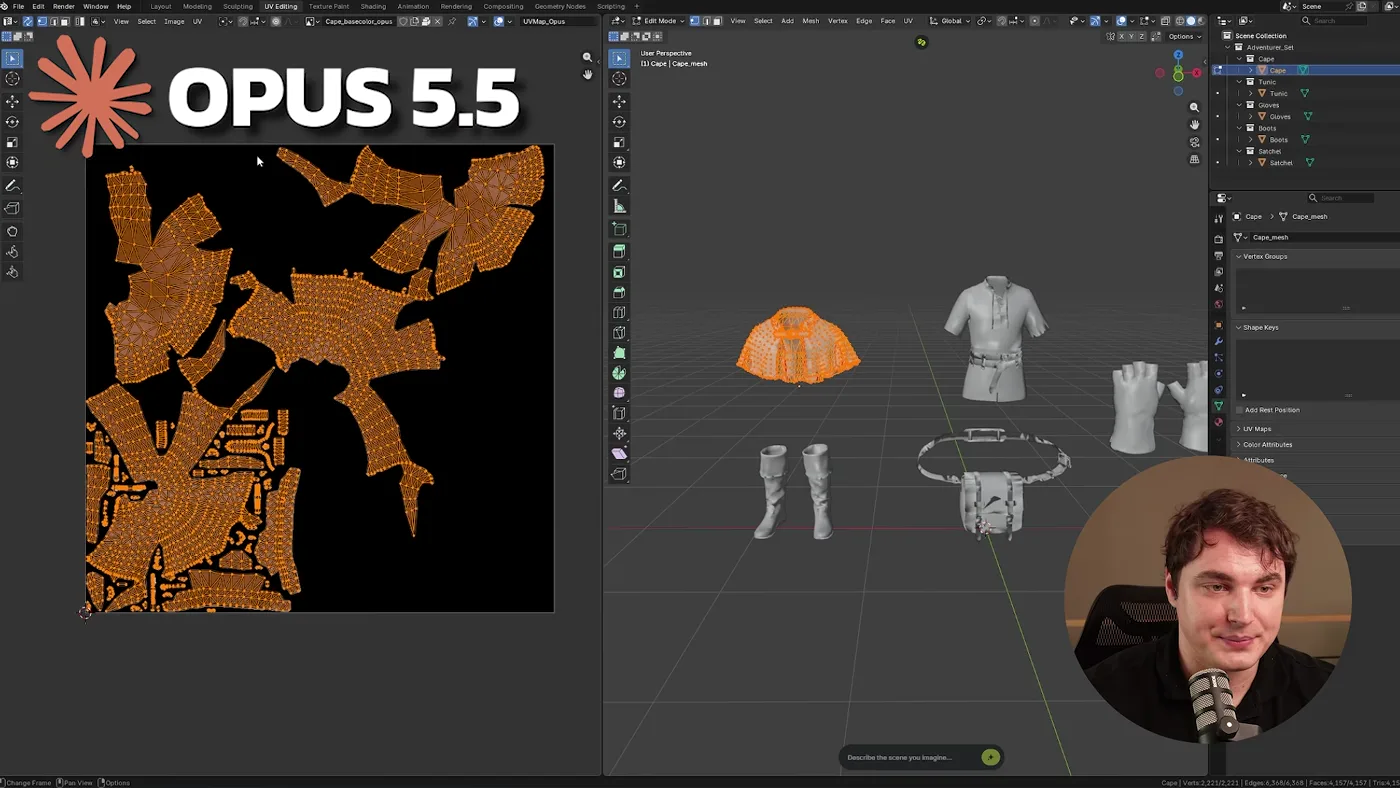
| UV unwrapping | None of them | - | Opus 5.5 and GPT-6 Astra both failed: tiny islands, half the UV space wasted |
A note on names, because they get confusing. GPT-6 Astra is OpenAI’s frontier model. GPT-6.1 Sol is the cheaper everyday tier that lost the Fortnite test; its result says nothing about Astra. Opus 5.5 is Anthropic’s second tier under Fable, and in 3D it trades blows with GPT-6 Astra anyway.
2. Claude Opus 5.5 vs GPT-6 Astra in Blender
These two are the closest contest. I gave both the same ten tasks at maximum effort, each in its own harness (Claude Code and Codex CLI), with full Blender access through MCP and permission to call 2D and 3D generation APIs through the Higgsfield plugin. Most of the time they chose to build everything procedurally anyway.
| Test | Winner | Time and cost |
|---|---|---|
| Movie street scene with a DeLorean | Opus 5.5 | About 1.5 h and about $25 each; Opus added the fire trails |
| Notre-Dame, fully procedural | Tie | GPT-6 Astra took 42 minutes, Opus 5.5 took 96 |
| Cadillac Eldorado, procedural | GPT-6 Astra | More detail and better lights; same time, similar cost |
| Pirate galleon, procedural | GPT-6 Astra | About 1 h each; GPT-6 Astra at roughly half the cost |
| VFX set in Three.js | Opus 5.5 | About 30 minutes each, few tokens |
| UV unwrapping four assets | Both failed | About 20 minutes and $10 each |
| Creature walk, jump and attack | Opus 5.5 | 46 minutes against 63 |
| Lego humanoid animation | Opus 5.5, narrowly | Neither was as playful as I hoped |
| Castle with fireworks and a timelapse | Split | GPT-6 built the more detailed castle; Opus had the better motion |
| One-prompt HTML game | Opus 5.5 | Far more fun to play, at almost three times the time and cost |
The score: Opus 5.5 five, GPT-6 Astra two, and three tests that were a tie, a split or a shared failure. GPT-6 Astra wins when the object can be described with math: symmetrical hulls, chrome trim, repeating windows. Opus 5.5 wins when the result has to move or feel good, which is most of game work.
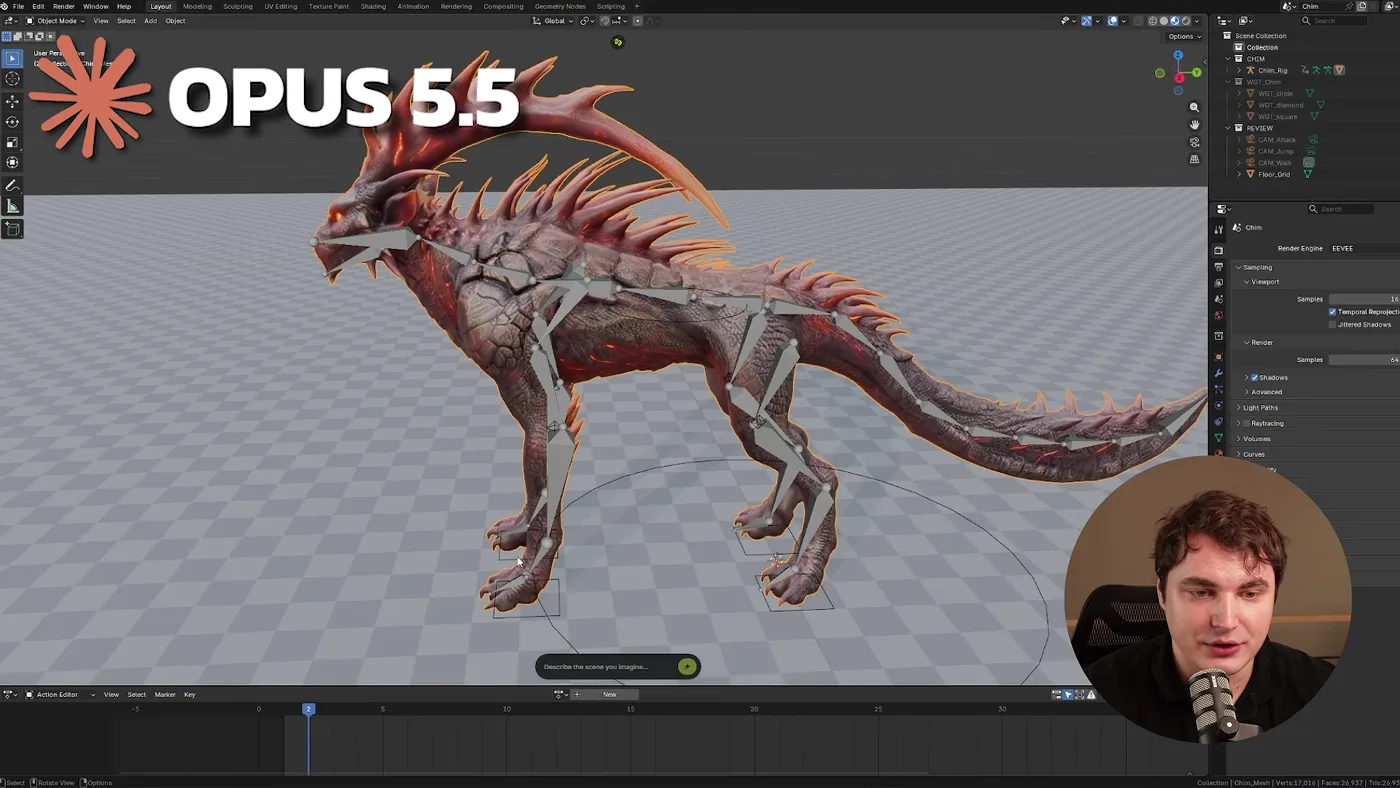
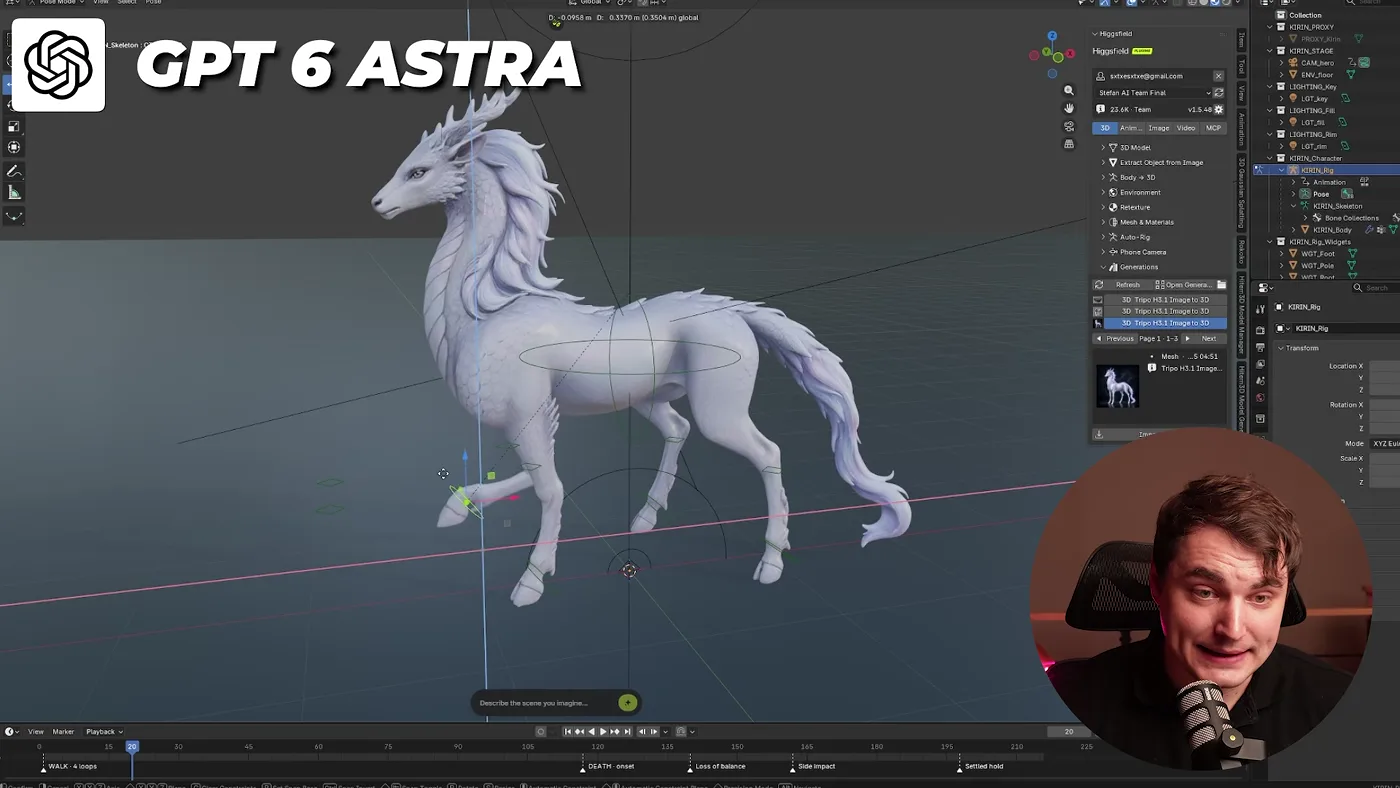
GPT-6 Astra on its own is still the model that made me rethink 3D work in September. Against Fable 5.1 it rigged my quadruped with clean weights and added a control rig with inverse kinematics that I never asked for. It rebuilt a whole town from one reference image, procedurally, in about an hour, at around 70K faces. It built a car from blueprints with an assembly animation and wrote a working Blender add-on in one prompt. More than ten of those tests used about 7% of my weekly limit on the top ChatGPT plan.
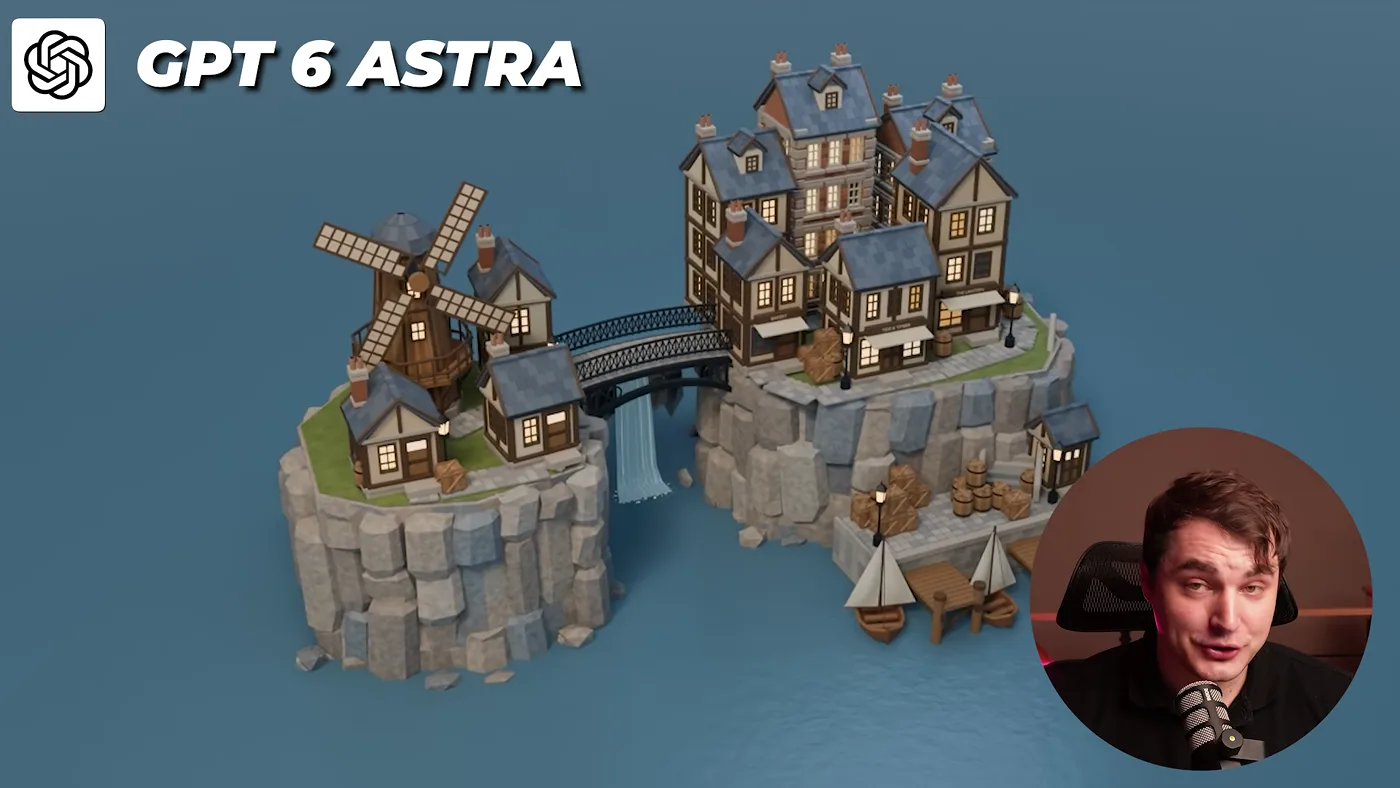
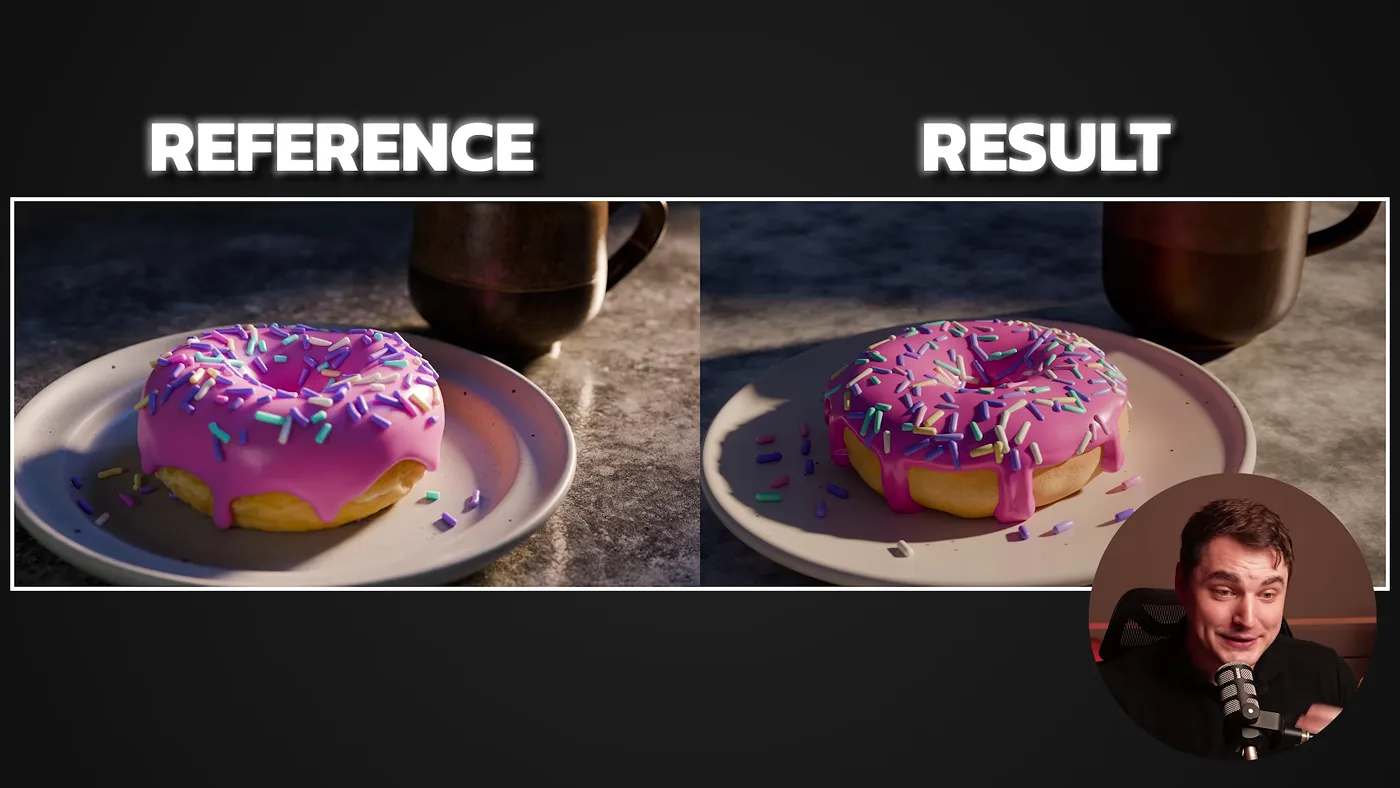
Opus 5.5 earned its place by rerunning tests that the best models struggled with a year ago. Two rounds of the famous donut test took 100 minutes and about $21, and the round with a reference image came out almost identical to it. A keyboard animation took 111 minutes and $23, an island assembled from 13 generated Tripo models took 62 minutes and about $20 plus $5.50 in generations, and a playable football game took 23 minutes. I played that one for 20 minutes and barely hit a bug.
3. Gemini 4 Argon: the budget pick, with limits
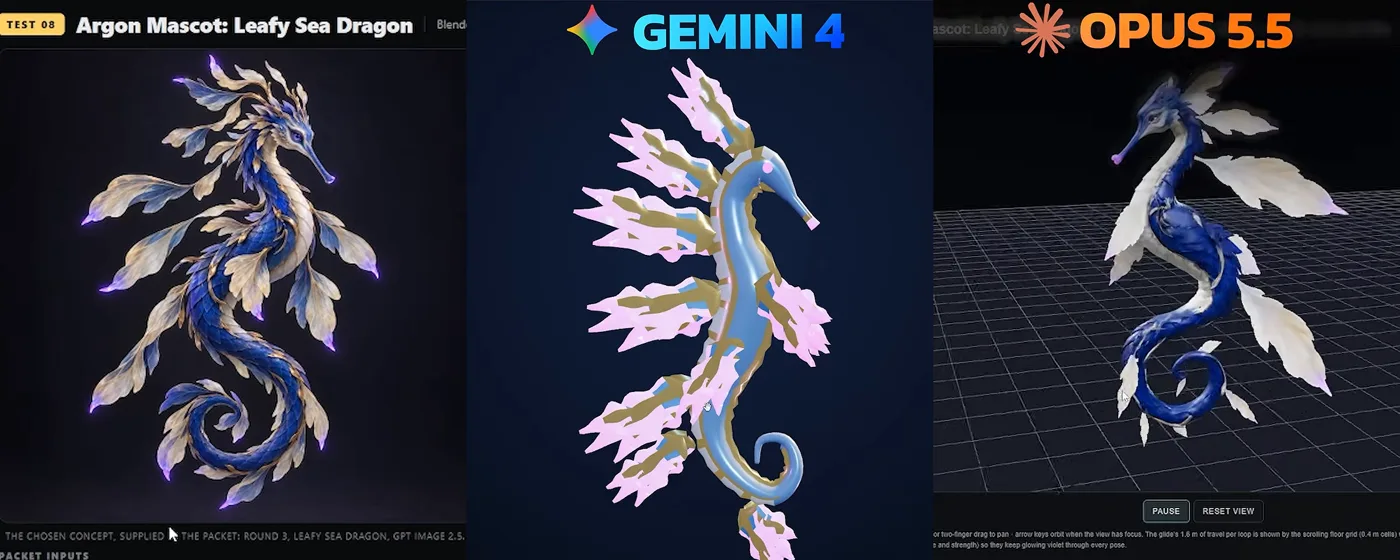
Google promised a lot for Gemini 4 in 3D, and the official benchmarks put it above GPT-6 Astra and Opus 5.5 on most of them. In my seven head-to-head tests against Opus 5.5 it lost six on quality, and the seventh went its way only because Opus misread my prompt. It also cost 4 to 14 times less every time: $2 against $15 for the sea dragon, $1.50 against $21.35 for a realistic Minecraft clone.
- Glass villa from two blueprints: both placed everything correctly, Opus looked better, Gemini cost a quarter as much.
- Sea dragon rig and animation: Gemini failed outright, even with access to a 3D generator. Opus generated the body and leaves and connected them properly.
- Aquarium wallpaper, incense VFX, Rocket League and Minecraft clones: Opus every time, at roughly 7 to 14 times the price.
- Game menu scene: Gemini delivered a working page in 30 minutes for $2; Opus misread my prompt and built a Blender file instead.
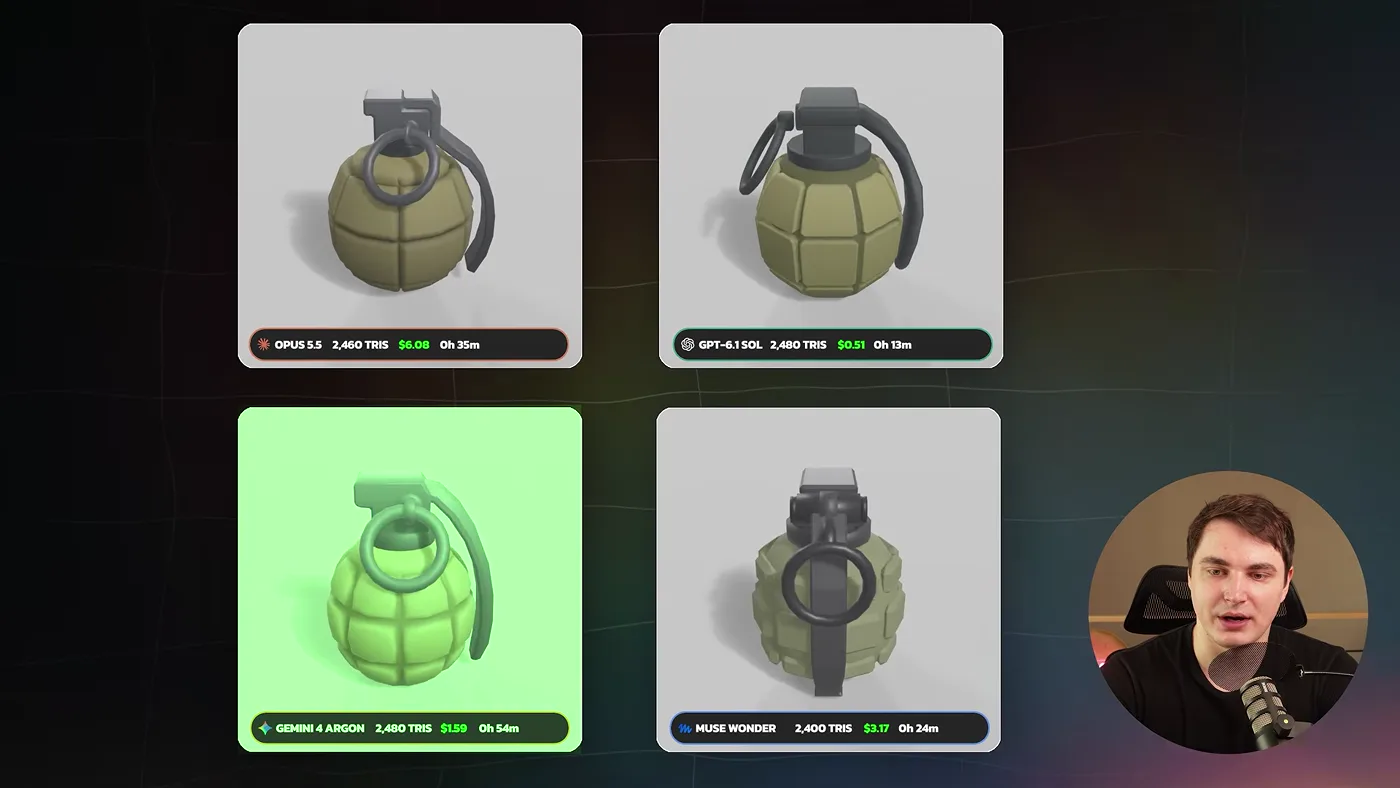
Then the Fortnite test flipped part of that picture. Building props one at a time, Gemini 4 made the best individual models of all four and finished second overall, with the best hit feedback and the best destruction. Speed is the price: it worked on the props for nearly 14 hours, while Opus finished the same set in about 4.
4. A complete game: Opus 5.5 vs GPT-6.1 vs Gemini 4 vs Muse
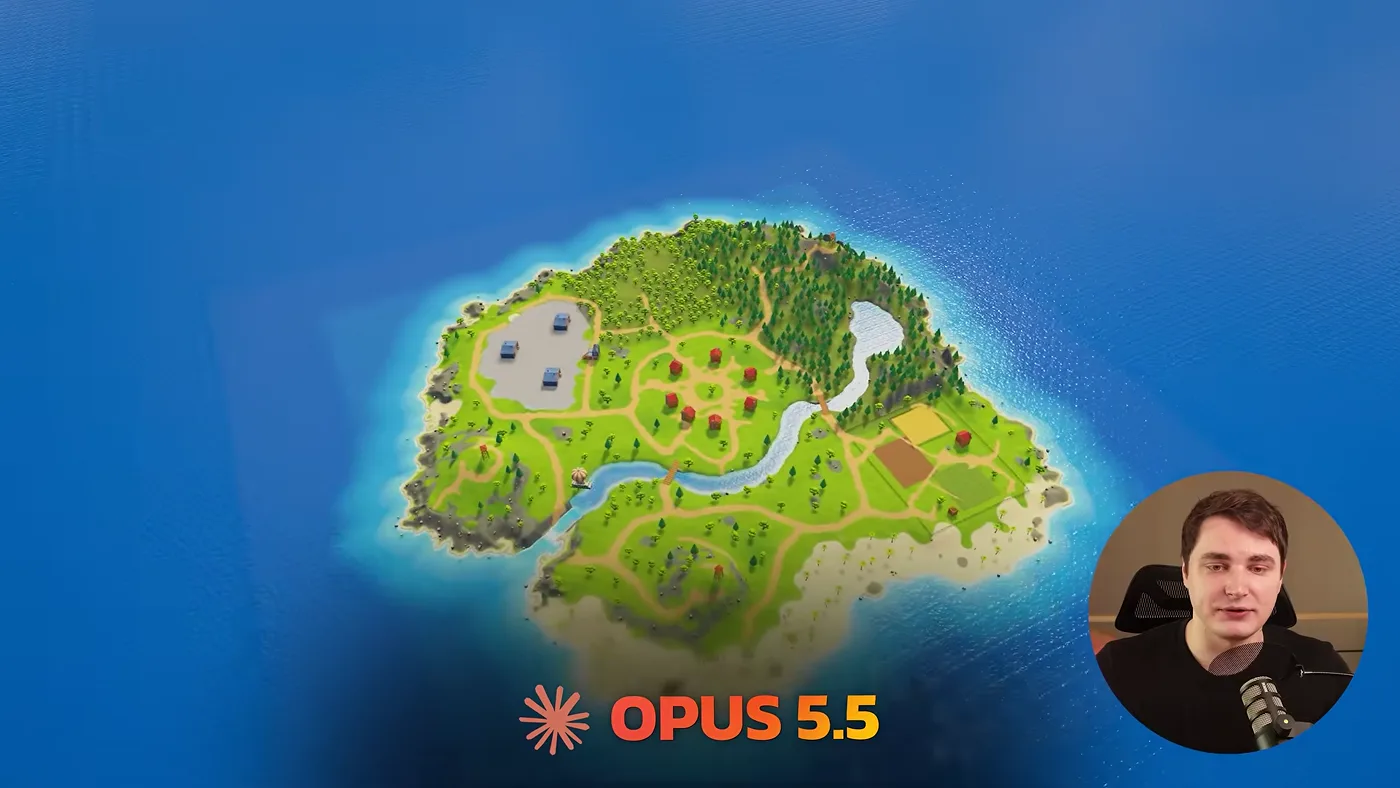
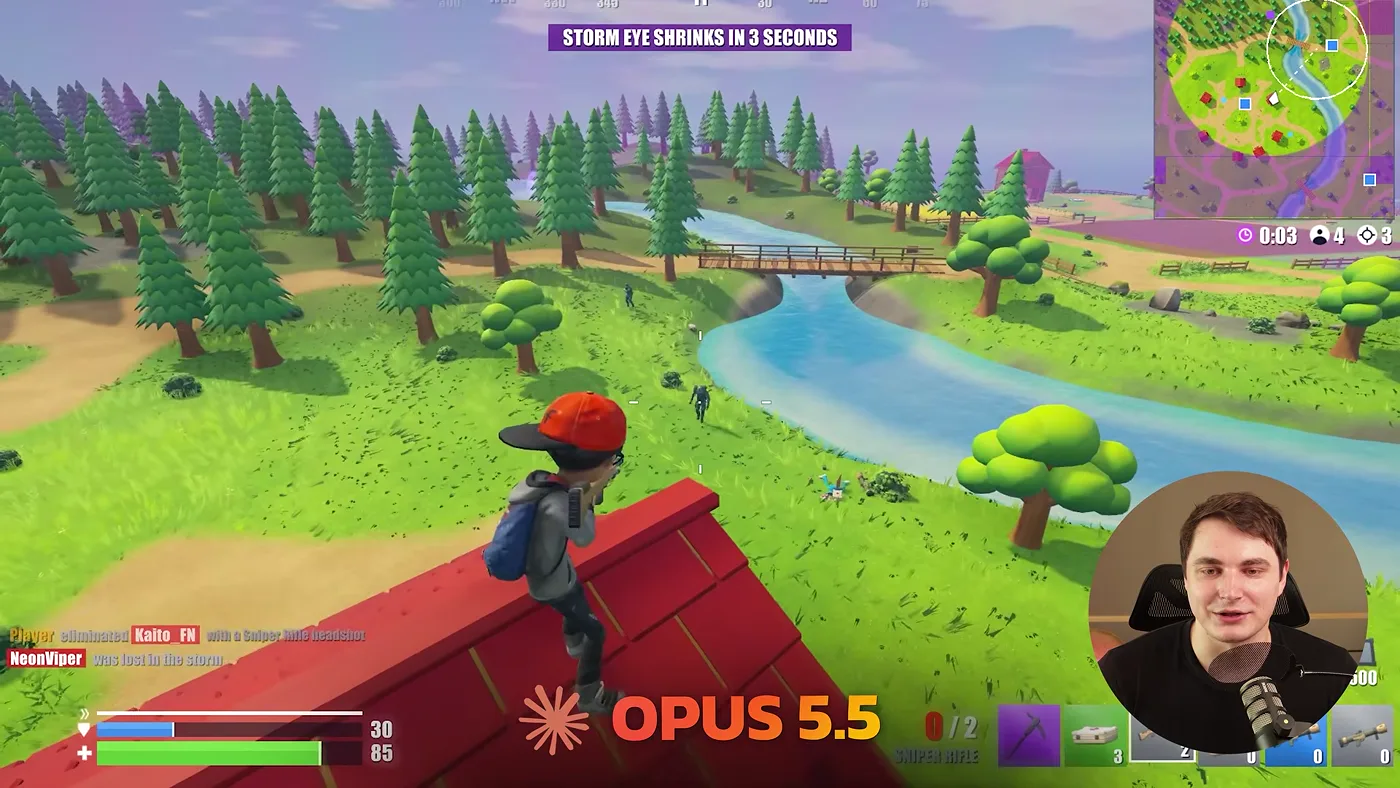
A whole game is where models fall apart. I asked four models to rebuild Fortnite in Unity in three stages: a set of props, the map, then the full game. Same prompts, Blender plus the Unity CLI as tools, Mixamo for characters and animation, and no 2D or 3D generators so that the models had to do the work themselves. Follow-up prompts were allowed; the whole test took three days.
| Rank | Model | Props | Map | Game | Agent time | Tokens | API cost |
|---|---|---|---|---|---|---|---|
| 1 | Claude Opus 5.5 | 2nd | 1st | 1st | 23 h 59 m | 778.9M | $282.29 |
| 2 | Gemini 4 Argon | 1st | 2nd | 2nd | 39 h 33 m | 302.7M | $132.59 |
| 3 | Meta Muse Wander | 4th | 4th | 3rd | about 30 h | about 183M | $191.71 |
| 4 | GPT-6.1 Sol | 2nd | 3rd | 4th | 41 h 50 m | 280.7M | $93.82 |
Opus 5.5 was the most expensive and also the fastest: 778.9 million tokens and $282 in under 24 hours of agent time. GPT-6.1 Sol was the cheapest at $94, but it ran the longest and its game felt wooden across the board: a frozen rifle, no pickup feedback, a missile for a bullet. Muse Wander looked the plainest but played better than Sol, and the AI that compiled my reports agreed.
5. Open-weight models: Kimi K3.1 Pro and DeepSeek 4.1
Open source is back in 3D. By Moonshot’s own numbers, Kimi K3.1 Pro sits second on Terminal Bench right after Opus 5.5, so I ran it and DeepSeek 4.1 Flash against Gemini 4 and Opus 5.5 on nine tests. I ran both open models inside the Claude Code harness: in their own harnesses (Kimi Code, for example) they are cheaper but lazier, because Claude Code pushes the model to iterate.
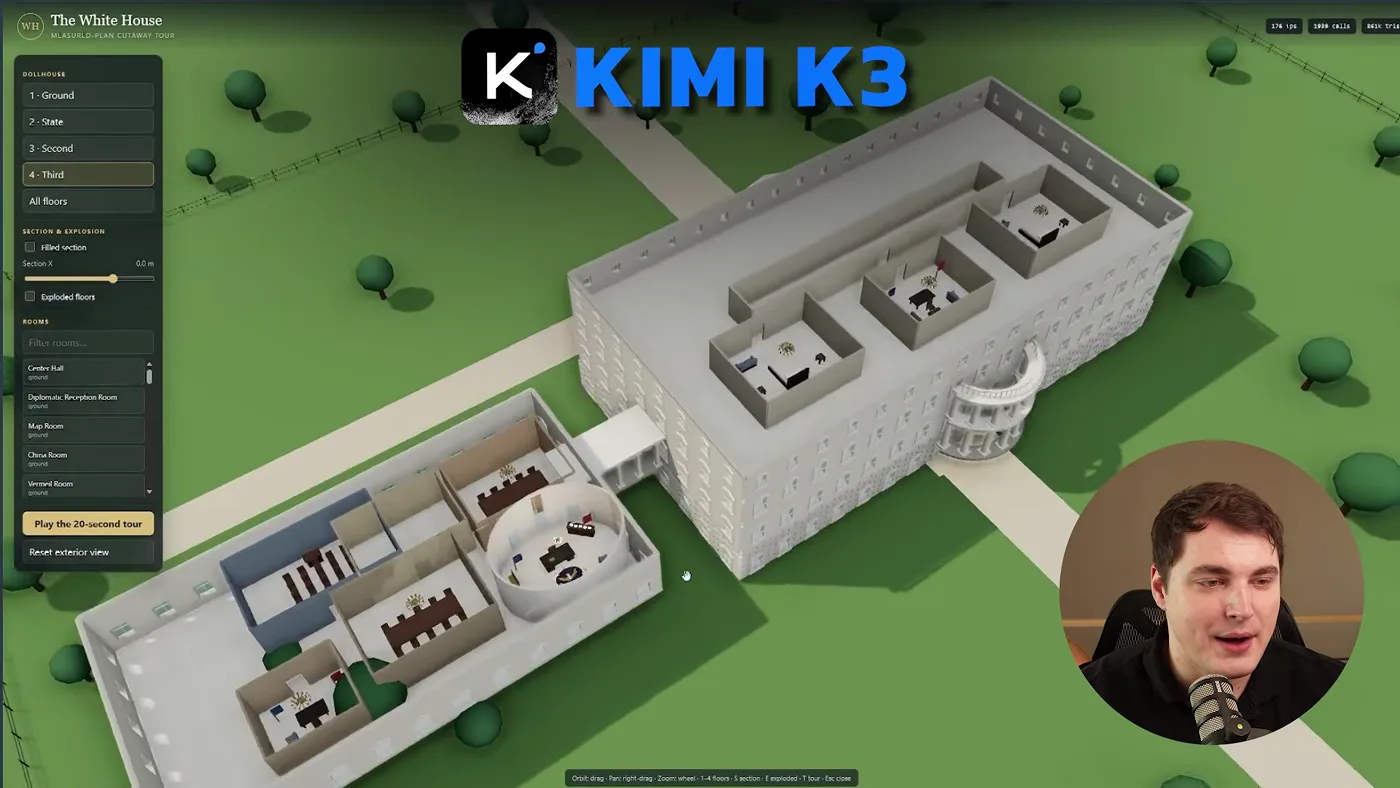
- Opus 5.5 still won most tests: the Apollo landing, the explorable White House, the Kawasaki H2 assembly and the breaching whale.
- Kimi K3.1 Pro landed near Gemini 4, and beat it on the car-to-robot transformation. It took the hard way on the origami crane and finished second, and its tiny-planets game had the cleanest controls of all four.
- DeepSeek 4.1 cost almost nothing and built a surprisingly good pinball game; Gemini 4’s ball got stuck every time.
- The price caveat: through the Kimi API, cache reads ($0.20 per million tokens) pushed my test costs close to Opus 5.5. Through Kimi Code or on your own hardware it is far cheaper; per token it is about 5 times cheaper than GPT-6 Astra.
DeepSeek has released its weights, and Moonshot said Kimi K3 weights would land on Hugging Face in early November. In an earlier August round, Grok came out ahead of the open-weight GLM 5.3 and Qwen 3.8 Max. GLM 5.3 was good but its API kept failing at max effort, and Qwen 3.8 Max failed the most. If you need to keep work on your own servers, GLM 5.3 and Kimi K3.1 are the ones to try.
6. The setup matters as much as the model
Every result on this page depends on how the model reaches Blender. Before you blame a model, check these three things.
- MCP, not computer use. With computer use, GPT-6 Astra needed 10 minutes just to save a file. An MCP server (the official Blender MCP or the free Higgsfield Blender plugin) lets the model call Blender directly and see the scene.
- The model’s own CLI at max effort. Claude Code for Opus, Codex CLI for GPT-6, the Antigravity CLI for Gemini. Chat windows cannot run your scene.
- 3D generators when quality matters. I banned them in the Fortnite test to measure the models; for production work, letting the agent call Tripo P2 or Hi3D gives far better assets than primitives.
I run all of this from my free workspace, Mr Mak Workspace on GitHub, which now supports Claude Code, Codex and Antigravity side by side. The full install guides are in the GPT-6 Astra setup and the Claude + Blender setup.
7. Where every model still fails
What it costs and how long it takes
In June, Opus 4.8 and GPT-5 still struggled to place ready-made objects with the right rotation. Today Opus 5.5 and GPT-6 Astra build full scenes, rig creatures and ship playable games, and the gap between them is down to taste and budget. My default is Opus 5.5 for anything that moves and GPT-6 Astra for anything with chrome on it. I keep Gemini 4 for cheap batches of props and watch Kimi for the day open weights catch up.
Related guides on this site: the GPT-6 Astra setup for 3D, the Claude + Blender setup, Kimi K3 building ten Unity games, and a free local LLM building a game in Unreal Engine 5.8.
Every test, on YouTube
- Nov 7, 2026 Fortnite in Unity: Opus 5.5 vs GPT-6.1 vs Gemini 4 vs Muse
- Oct 25, 2026 Kimi K3.1 Pro vs DeepSeek 4.1 vs Gemini 4 vs Opus 5.5
- Oct 15, 2026 Gemini 4 Argon vs Opus 5.5 in 3D and Blender
- Sep 27, 2026 Opus 5.5 reruns my Blender tests from a year ago
- Sep 24, 2026 Claude Opus 5.5 vs GPT-6 Astra: 10 Blender tests
- Sep 7, 2026 GPT-6 Astra in Blender (vs Fable 5.1)
- Aug 26, 2026 GLM 5.3, Qwen 3.8 Max and Grok on 3D tasks
Last updated November 9, 2026. Next on the list: Gemini 4 Carbon and Muse Wonderful, once I get access.